A Lighter Way to Track a Habit
There is a version of habit tracking that helps and a version that quietly takes over. The difference is not the tool. It is whether the record is a description of what happened or a score that has to be defended, and the second one turns a small routine into an obligation within about three weeks.
Why track anything
The honest answer is memory. People are unreliable about their own habits in both directions: a habit kept four days in a row feels like a fortnight, and one missed for a week feels like a slip. A record settles the question in about two seconds and removes an argument nobody needs to have with themselves.
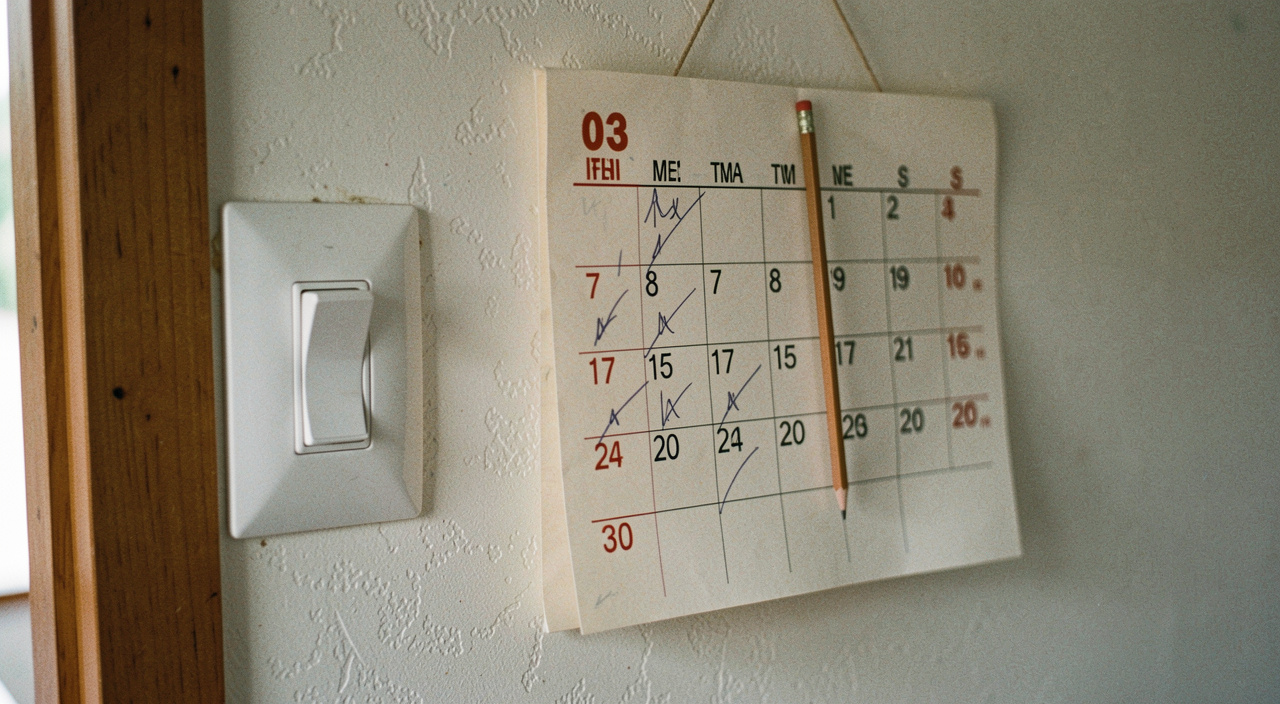
The second reason is visibility. A mark on a wall calendar is a reminder that requires no notification, which is a real advantage in a day already full of them, for the reasons set out in the piece on protecting an evening.
What tracking is not for is motivation. A record does not make a habit happen. Placement does, triggers do, and size does, which is the argument of the entry on habits designed for low energy days.
The trouble with streaks
A streak converts a habit into a number, and numbers behave differently from habits. Three things follow.
The first is that the number becomes the object. Once there are forty days in a row, the forty is what is being protected, and the habit is performed in whatever degraded form keeps the count alive. A walk becomes a walk to the end of the road at eleven at night for the sake of the record.
The second is that a break becomes a failure with a size attached. Missing one day when the count is at three costs nothing. Missing one day when the count is at ninety feels like losing something, and the reaction to losing something is frequently to abandon it entirely.
The third is subtler and more damaging: streaks reward the habits that can be done every day and quietly kill the ones that cannot. A long walk cannot be done daily. A habit that is meant to happen twice a week has no streak to keep, so it drops out of the system and then out of the week.
A streak turns the count into the object, and then the habit gets performed in whatever degraded form keeps the count alive.
Three light methods
| Method | How it works | Why it stays light |
|---|---|---|
| A tick on a wall calendar | One pencil mark on the day | Visible, no total, no app |
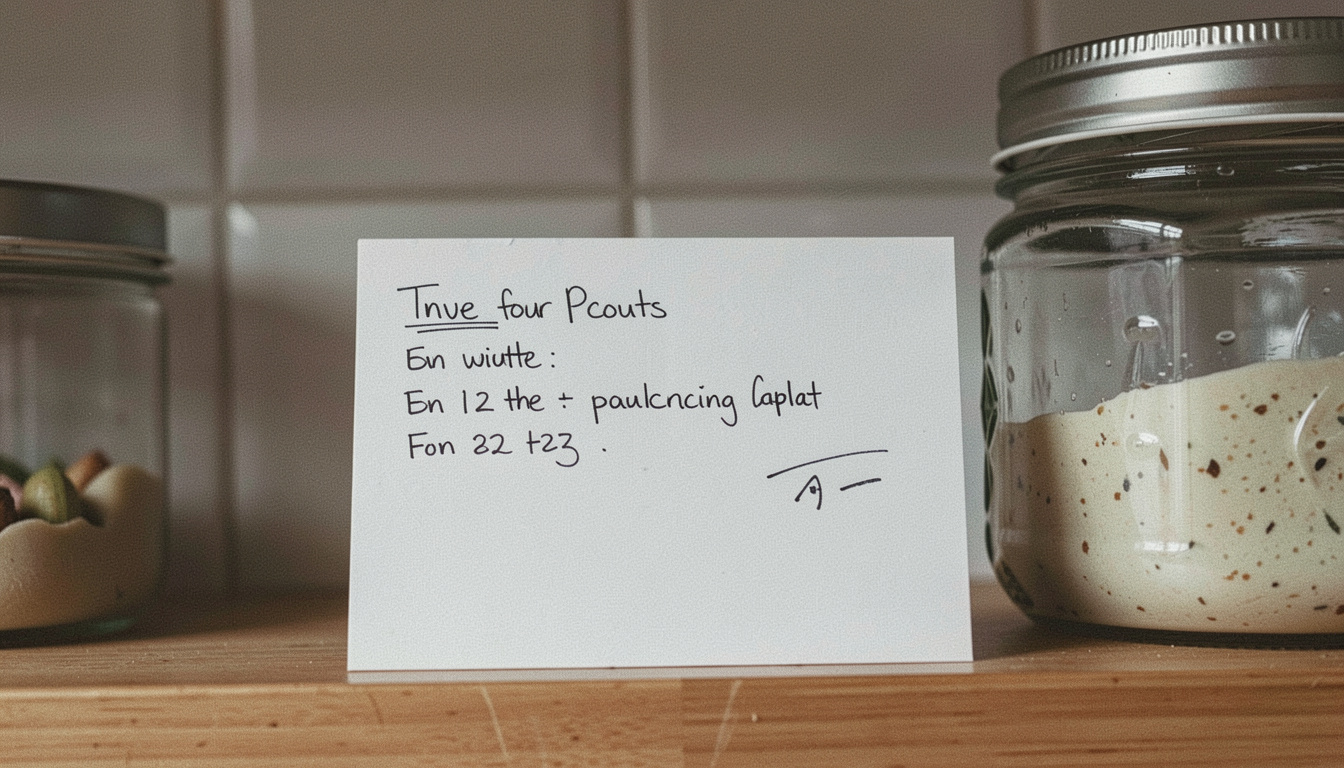
| An index card per month | One line per habit, marks along it | Ends and gets thrown away |
| Three lines in a notebook | Written, not counted | Records the day, not the score |
The third overlaps entirely with a habit we treat separately, and if you are already keeping three sentences in the evening you do not need a tracker at all. That habit is described in the entry on five minutes of journaling.
The index card deserves a word. Its virtue is that it expires. A card that covers one month gets thrown away at the end of it, which means no total accumulates and nothing can be broken. Starting again on the first of the month is not a restart, it is simply the next card.
What not to record
Two things, in our experience, turn a light record heavy.
The first is quality. A column for how well it went converts a tick into an assessment, and assessments are what people avoid. The tick should mean it happened, at whatever size, including the floor version described in the entry on floors and bad days.
The second is quantity. Minutes walked, glasses drunk, pages read. Numbers invite comparison with yesterday, and comparison with yesterday is how a slow walk gets replaced by a brisk one, which is a real effect described in the entry on walking pace. What gets measured gets optimised, and not always in the direction anybody wanted.
Reading it back
A record that is never read is just a chore, so it is worth having a moment for it, monthly rather than daily. Three questions are enough, and none of them is about the total.
Which habits happened on most days without effort. Those are established and can stop being tracked, which is the goal rather than an admission of anything. Which happened only in clusters. Those usually depend on something external, a free week, a person, a season, and are events rather than habits. And which never happened at all, which is a signal that the trigger is wrong rather than that the person is.
That third case is the most common and the most fixable. A habit that never happens almost always has no cue attached to it, and the repair is placement rather than resolve, in the way described in the piece on a jug left where everyone eats.
What we noticed
Running a wall calendar and an index card side by side for a fortnight, the calendar was marked more reliably, because it hangs by a light switch and is impossible not to see. The card was more useful to read back, because it held several habits on one surface and could be taken in at a glance.
The finding that mattered was about what the marks did to a missed day. With no total in sight, a gap was legible as a gap. There was no urge to compensate, and nothing had to be restarted. That is the entire practical case for the light version, and it is the reason no habit described anywhere on this site comes with a target attached.
The last observation is that two of the habits we were tracking dropped off the card by the end of the month, not because they had failed but because they no longer needed recording. Stopping tracking a habit that has settled is the correct end of this process, and it is worth saying plainly, because most tracking systems are designed never to end.
Read next
The reason the tick should mean it happened at any size is explained in the piece on a minimal morning routine.
For the design of the habit itself rather than its record, see the two minute habit entry.
If you would rather write than tick, three sentences in the evening does both jobs at once: the journaling entry.
Measurement changes behaviour in ways that are easy to miss, and the clearest example on this site is in the pace entry.
Evening rituals rarely need to be elaborate. A few slow breaths before bed, a short round of qi gong, ten minutes of meditation, or a guided yoga nidra track can each become a small repeatable habit, done at roughly the same time and in the same corner of the room. The point is not intensity but steadiness: the body learns the signal. A new entry in the stress-calm section, titled Slow Practices for Sleep and Steady Days, gathers these slow practices for sleep into one calm look at evening tension and how it loosens.
An X-ray, a CT and an MRI all begin the same way: a clinician writes a request, naming the body part and the question. From there the paths divide. Plain films send a short burst through the chest or a wrist and land on a flat image. CT circles the body and builds slices. MRI uses a magnetic field and shows soft tissue without radiation. Each method sees differently, and the radiologist reads the result into a written report. A calm walk through that chain, imaging explained from request to report, makes the waiting feel less opaque.
Aging well in Luxembourg is less a single decision than a set of small arrangements made early. Housing matters first: a ground-floor bathroom, a wider doorway, a light switch reachable from the bed. Then services, which vary by commune and are best checked before they are needed. The STATEC figures describe a population, not a person, so read them as background rather than forecast. One recent entry, aging well in Luxembourg, gathers these threads into a practical view of home setup, activities, and the numbers themselves.
Colouring hair, whether at the kitchen sink or in a salon chair, tends to go better when it is treated as a routine rather than an event. Reading the hair first matters: its dryness, its previous colour, the way it absorbs water. These small observations decide more than the shade on the box. Between appointments, steady habits carry most of the work, gentle washing, cooler water, and a schedule that does not chase every new root. A recent entry in the habits and routines section looks at exactly this, offering a calm guide to home and salon hair colouring, from the first choice of shade to the quiet weeks of upkeep that follow.
Sweat shows up in predictable places: the palms, the forehead, the back of the neck, the small of the back. Clothing matters more than most people expect. A breathable layer against the skin, a looser cut over it, and a spare shirt kept nearby can carry an afternoon further than willpower alone. The habits are small and unglamorous: a minute of cool air before a meeting, a glass of water at the desk, a pause to let the body settle. For a plain look at sweating through an ordinary day, the details stay modest and the day stays workable.
Some evenings the mind keeps working after the body has stopped. A quiet way to close that gap is to give it a small, fixed thing to look at: a single card, a birth chart, a number. The first steps are modest. Western astrology asks you to learn twelve signs, four elements, the planets and the houses they sit in. Marseille tarot begins with the major arcana and one simple three card spread. Numerology reduces a birth date to a life path number. A calm introduction to astrology, tarot and numerology for beginners can sit beside a bedtime routine without asking for more than ten minutes.
Friendship in France often runs on small, unremarkable gestures: a message sent at the same hour each week, a walk taken on the same street, a coffee that does not need a reason. Loneliness rarely announces itself; it settles in when those gestures stop. Some people add one call, one shared meal, one short walk, and let the rest stay quiet. Others try online therapy when the days feel heavy, usually in the evening, from a kitchen table. A new entry in the stress-calm section, Small Habits for Relationships and Quiet Days, looks at small habits for relationships and the routines that hold up over time.
Price lists for professional hair colour rarely line up side by side, because each salon quotes a service, not a tube. A calm comparison starts with the same reference: one brand, one shade family, one developer strength, then the same length and density of hair. In France, published guides often group prices by brand line and by the technical step, which makes the numbers readable without a visit. The new habits-routines entry on comparing pro colour prices walks through that method and explains why a technical guide matters more than a single figure when a salon plans its stock and its time.
A routine is only as steady as the ground it stands on. For readers who want to understand that ground in another country, a new entry in the habits-routines section gathers the practical side of women in Spain: rights and health: how equality is framed in law, where to turn after violence, which screening calendars run on what schedule, and the work rules that shape a week. It is written in the same plain, unhurried register as the rest of the magazine, with Spanish resources listed for anyone who needs them.