The One Shelf at a Time Decluttering Habit
Decluttering is usually planned as an event: a free Saturday, several bin bags, an entire room. The event requires a whole day, so it waits for one, and the waiting is where most of it stays. A shelf takes twenty minutes and does not have to wait for anything.
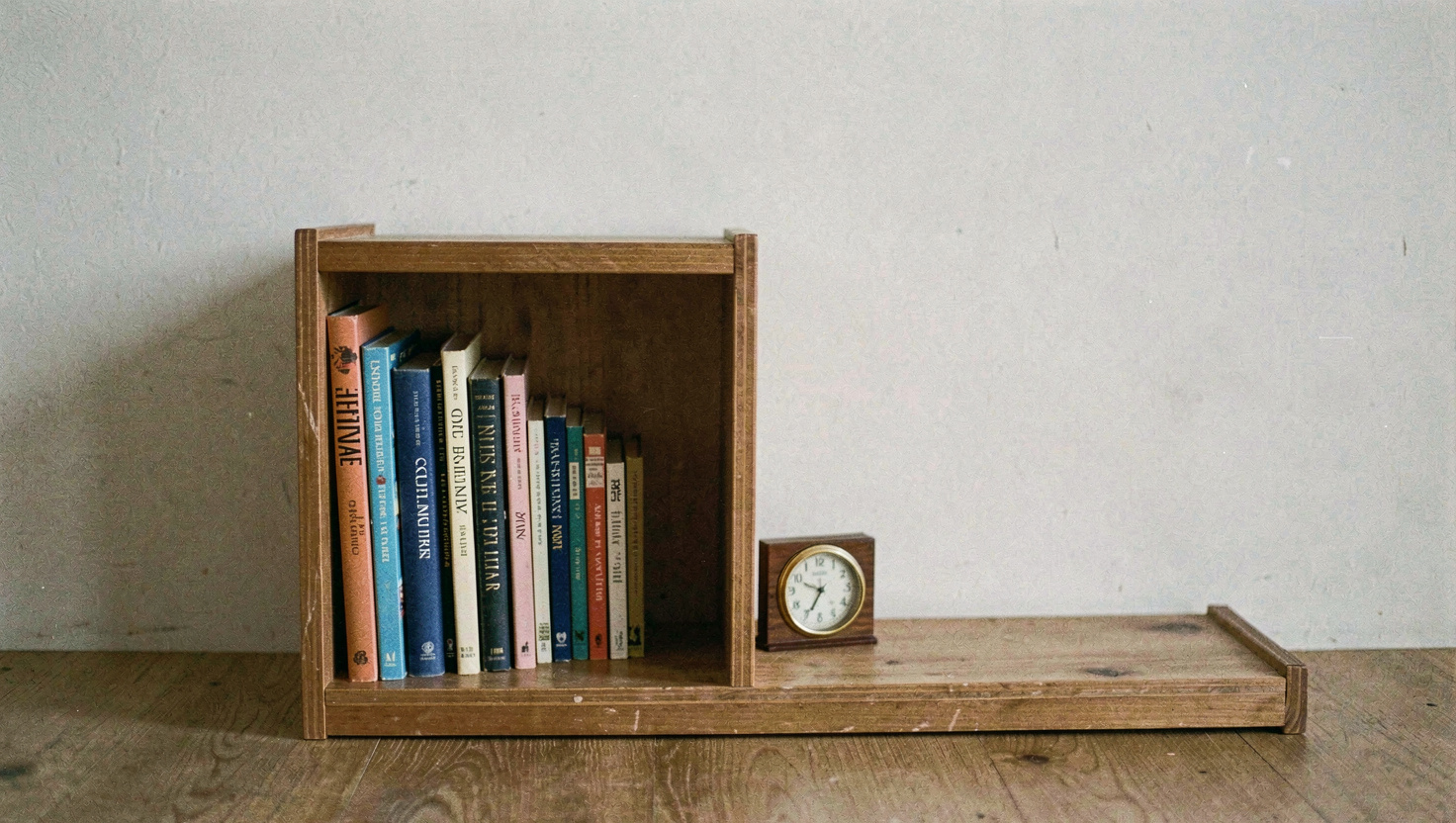
The weekend that never comes
There is a particular kind of failure that belongs to big tidying projects. The room gets started, every drawer gets opened, the contents come out onto the floor, and then the day runs out. The room is now worse than it was, and the experience is unpleasant enough that the next attempt is scheduled some distance into the future.
A shelf cannot do that. It is small enough to finish, and finishing is the thing that makes a person willing to do it again. A habit that ends in a visible completed result repeats. A habit that ends in a floor covered in things does not.
The unit is a surface
The rule we settled on is that the unit is one surface, not one room and not one category. A shelf, a drawer, the top of a chest, one half of a worktop, the inside of a bathroom cabinet. It has edges, so there is no argument about where it ends.
| Unit | Roughly | Ends in |
|---|---|---|
| One shelf | Fifteen to twenty minutes | A finished shelf |
| One drawer | Ten minutes | A drawer that closes |
| One worktop | Twenty minutes | A surface you can cook on |
| A whole room | A day, in theory | Usually, a worse room |
Twenty minutes is also, not coincidentally, short enough to fit into an evening without displacing it. It fits particularly well as part of the room reset at the end of a wind down sequence, which is described in the entry on building that routine.
A habit that ends in a finished shelf repeats. A habit that ends in a floor covered in things does not.
What to do with what comes off
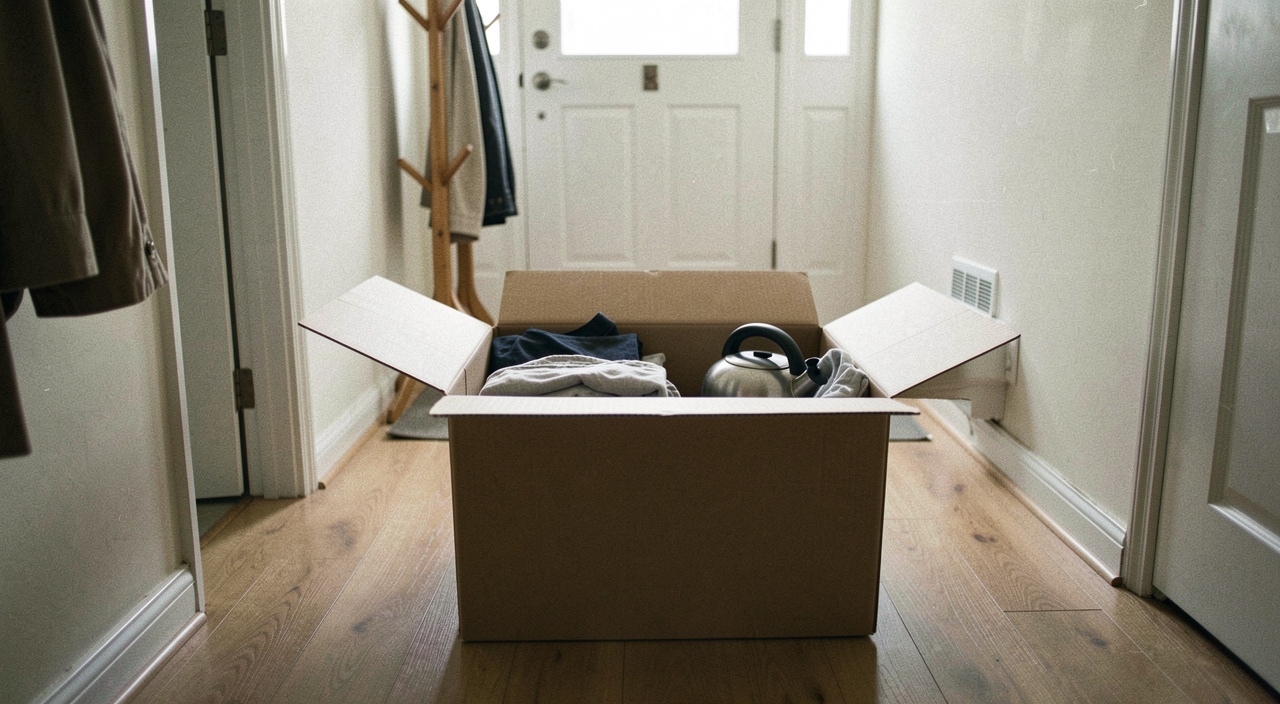
The part that stalls a shelf is not the tidying, it is the deciding. Every object raises a question, and questions take longer than dusting. Three destinations, agreed in advance, remove most of the deciding.
The first is somewhere else in the house, for things that were simply in the wrong room. The second is a box by the front door, permanent, for things leaving the house, which is emptied whenever it is full rather than on a schedule. The third is the bin, which needs no explanation.
What matters is that the box exists before the shelf is started. A bag that has to be found halfway through is the point at which a twenty minute job becomes a forty minute one, and forty minute jobs do not get repeated on a Tuesday.
The surfaces that matter most
Not all surfaces are equal, and there is an order worth following if the aim is for the habit to feel worth it early.
The first is whatever surface you eat at. A table covered in paperwork means meals get eaten standing up or at a desk, which is upstream of a habit we care about a good deal, described in the piece on eating at a table rather than a worktop. Clearing a table is therefore not a cosmetic act.
The second is the desk, for the reason set out in the desk setup entry: a desk with no free space forces the keyboard and mouse into positions the shoulders pay for by mid afternoon.
The third is the surface nearest the door, which is where everything in a household accumulates, and the fourth is one shelf in the kitchen given over entirely to breakfast, which is the single change described in the entry on the breakfast that needs no decisions that did the most for that habit.
What we noticed
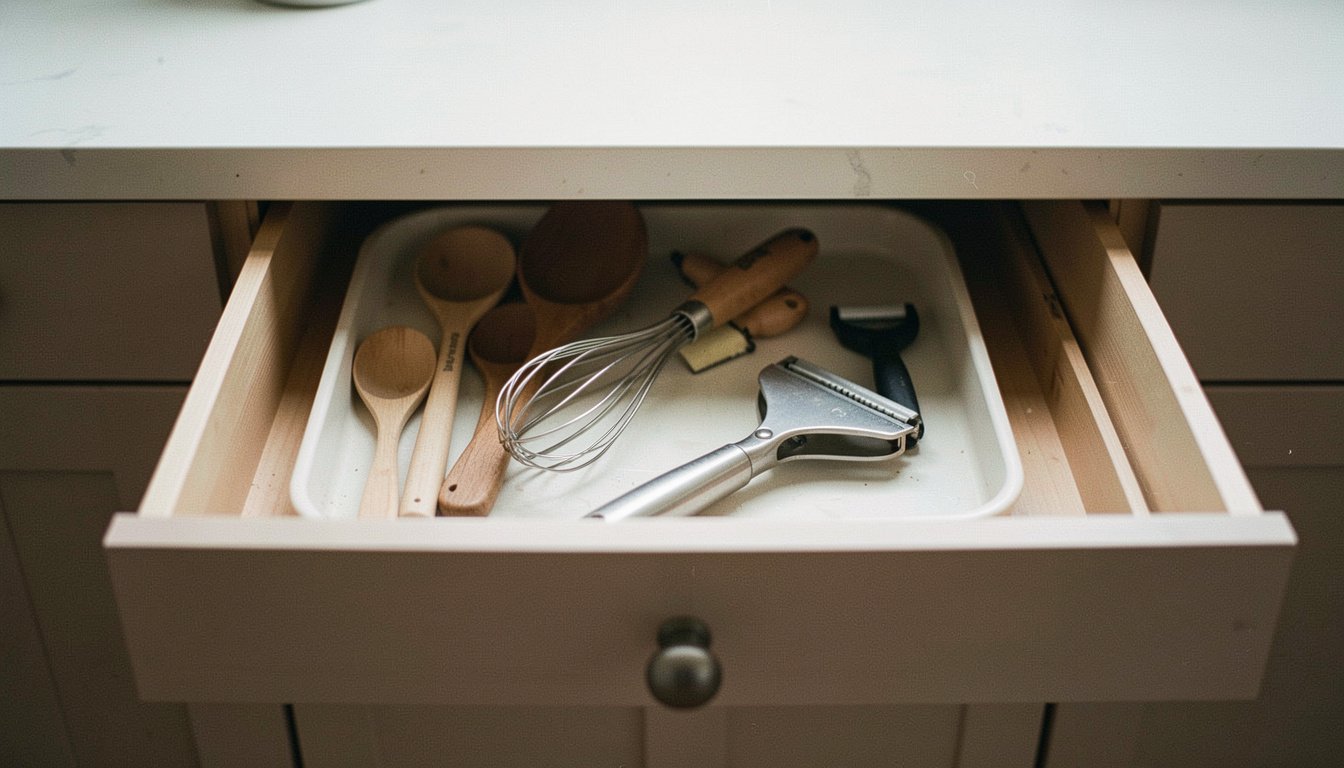
Over a fortnight we did nine surfaces, which was more than either of us expected and considerably more than the zero rooms achieved in the preceding several months of intending to do a room.
The observation worth recording is about spread. A single tidy shelf made the shelf below it look worse, and the shelf below it was done two days later without any plan to do it. This is not a mysterious effect, it is contrast, but it does mean the habit has a certain amount of momentum built in and does not need to be scheduled beyond the first one.
The other observation is that the box by the door filled slowly and was emptied once. That is a modest result and we would rather report it than a dramatic one. The aim was never an empty house. It was a table you can eat at and a desk you can work at, and both of those took twenty minutes each.
Read next
A cleared surface near a window is the start of the next habit, which is letting more daylight into the day.
The most useful thing to do with twenty cleared minutes and a corner is described in the quiet corner entry.
Clearing the table is what makes the meal habit possible: see the meal pace entry.
The twenty minute unit is chosen for the same reason as the two minute one, explained in the entry on cutting a routine down until it starts.
Aging well at home rarely turns on one decision. It turns on small arrangements made early: a lamp within reach of the bed, a clear path to the bathroom at night, a chair with arms for standing up. In Luxembourg, the same logic applies to services and activities, which work better when they are already familiar before they are needed. STATEC figures can help set a rough direction, though they describe a population, not a household. For a plain, unhurried walk through housing, home setup, and how to read those numbers, see arranging a home for later years.