The Habit of Eating a Little Slower
Of all the food habits worth testing, this is the only one that changes nothing about what you buy, cook or spend. It changes the clock. A meal eaten in four minutes standing at a worktop and the same meal eaten in fifteen at a table are, in every way that a person notices afterwards, two different meals.
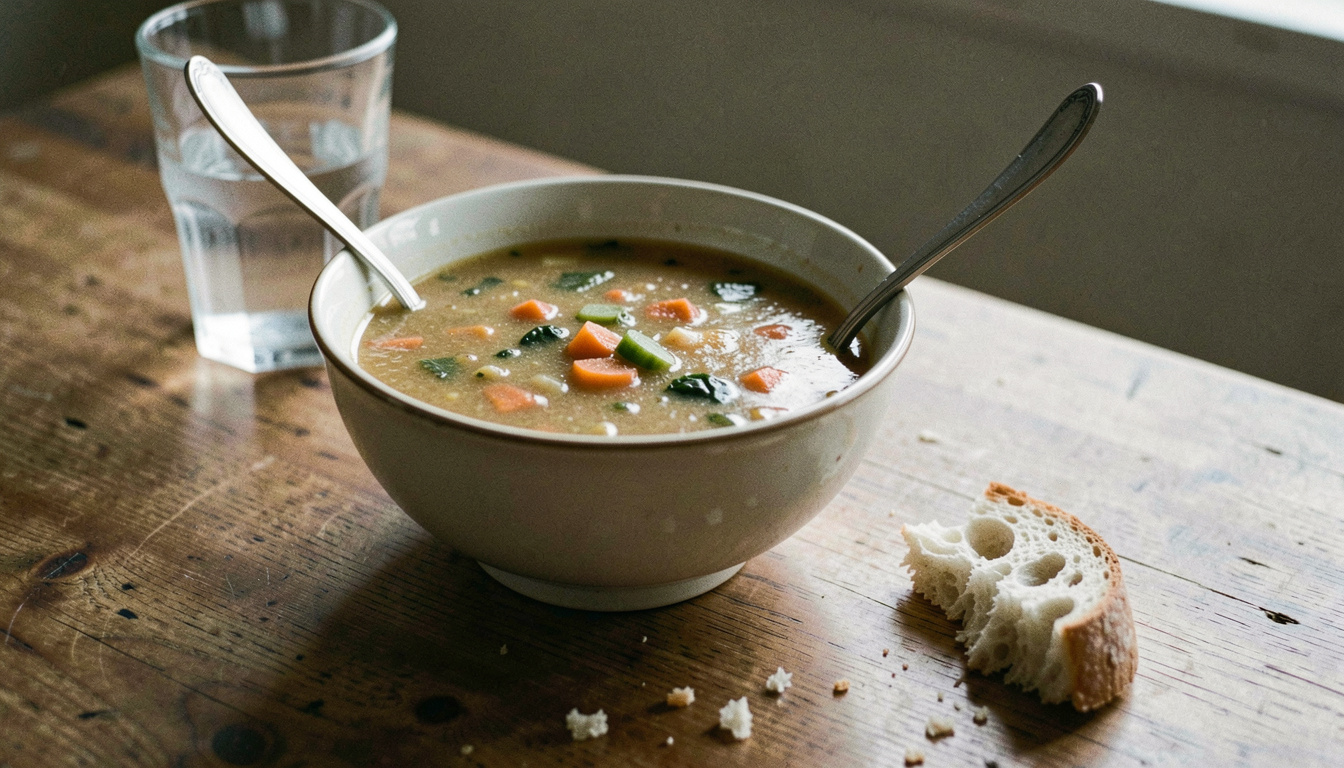
The four minute meal
Lunch at a desk is the clearest example. The food arrives, the screen stays on, and the meal is finished before the person has registered starting it. Nothing was enjoyed and nothing was noticed, and the strange consequence is that it often does not feel like a meal happened at all, which is why a second one gets looked for at four in the afternoon.
The common account is that fullness takes a little while to register, so a meal finished very quickly is finished before the signal arrives. That explanation is widely repeated and we will let it stand as an explanation rather than a fact. The part that needs no mechanism at all is simpler: a meal eaten while doing something else is not remembered, and an unremembered meal is unsatisfying regardless of what was in it.
What slowing down actually means
It does not mean chewing a set number of times, which is the sort of instruction that makes a meal into a task and gets abandoned by Wednesday. It means three specific and rather mechanical things.
First, the meal has a defined beginning: sitting down, in a chair, with the plate on a surface. Second, the utensil leaves the hand at least occasionally. Third, the meal has an end that is decided rather than a plate that has simply run out.
Those three are enough. Everything else people write about mindful eating sits on top of them and is optional.
A meal eaten while doing something else is not remembered, and an unremembered meal is unsatisfying whatever was on the plate.
Three mechanical tricks
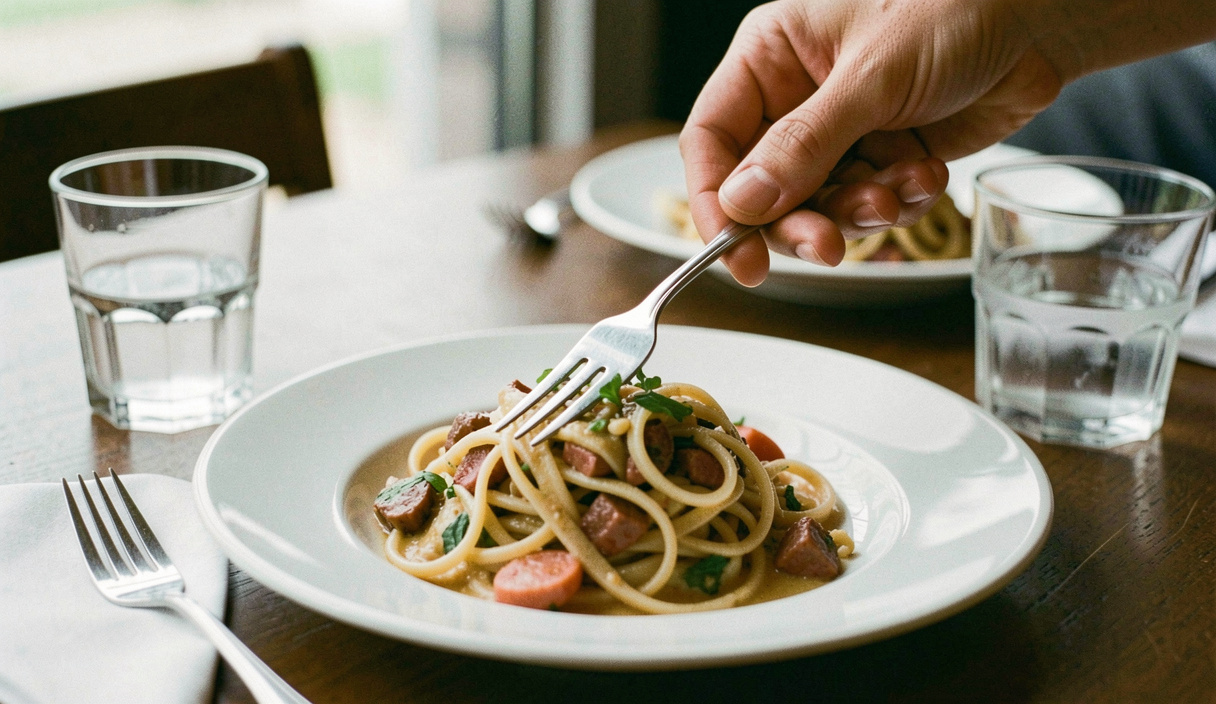
Three things worked and one did not.
| Trick | How it works | Held for a fortnight? |
|---|---|---|
| Put the fork down between mouthfuls | Physically interrupts the rhythm | Yes, on about half the meals |
| A glass of water on the table | Creates natural pauses | Yes, easily |
| Eat with someone else | Conversation sets the pace | Yes, whenever possible |
| Counting chews | Turns eating into an exercise | No, abandoned in three days |
The water is worth a note. A glass on the table does two jobs at once, and it is the same glass that solves the habit described in the entry on hydration cues. One object, two habits, no additional decisions, which is about as efficient as this sort of thing gets.
The table matters
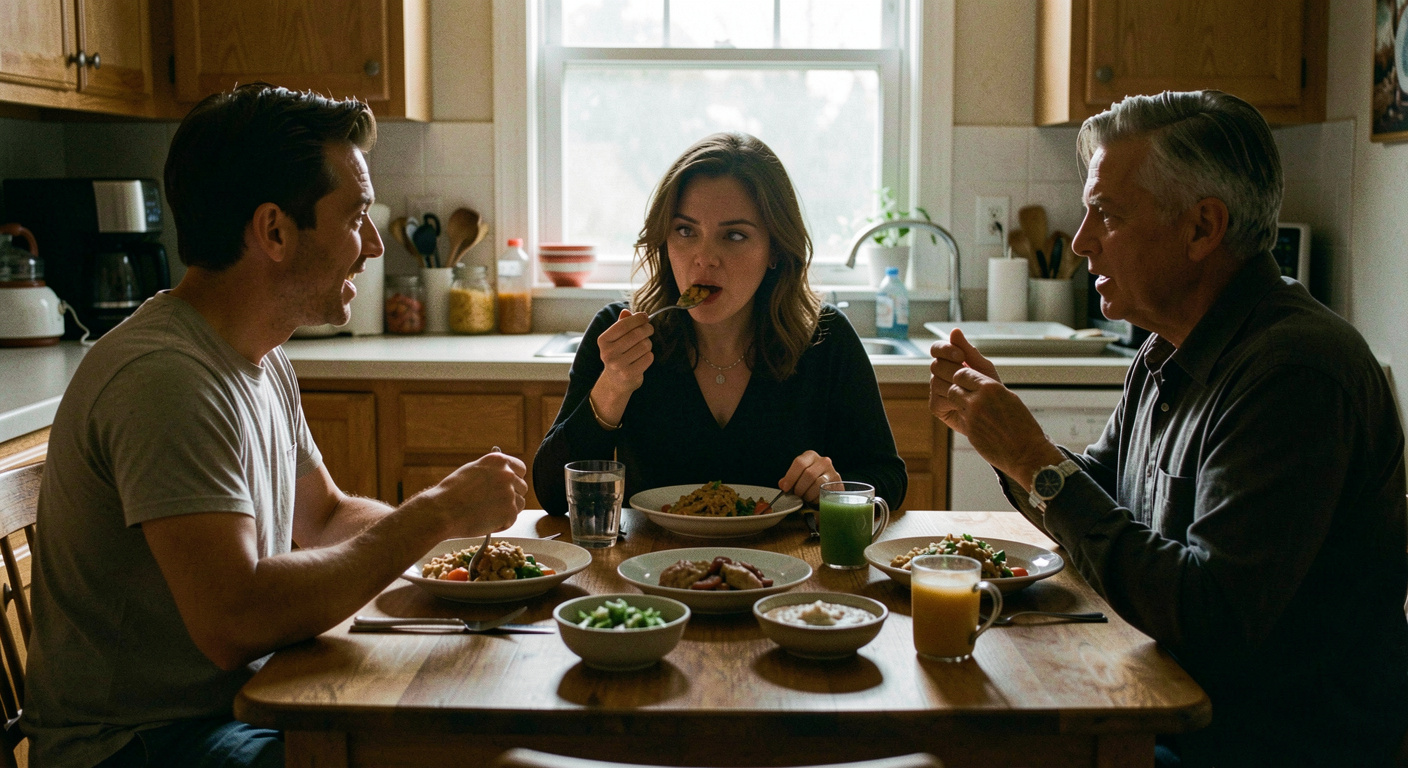
The strongest single factor in how fast a meal is eaten is not willpower, it is the surface. Meals eaten standing up are fast. Meals eaten at a desk with a screen on are fast. Meals eaten at a table, sitting, with the plate on the table rather than on a lap, are slower without anybody trying.
That makes this a room habit as much as a food habit. Clearing a surface so that it can be eaten at is the sort of one time change that keeps paying, and it is exactly the kind of small, contained tidying described in the entry on doing one shelf or one surface at a time.
Company is the other factor, and it is the most effective of all. A meal eaten with someone else takes as long as the conversation takes. There is no technique involved and nothing to remember. Where that is not available, the fallback that worked for us was simply putting the screen face down rather than off, which is the low effort version of the change described in the entry on setting screens aside.
What we noticed
Two weeks, three meals a day, one household, notes kept on paper. Breakfast was the meal most improved and the easiest to change, because it happens at home and nobody else is competing for the table. Lunch was the least improved, because on working days it happens wherever there is room. Dinner changed the least in speed and the most in atmosphere, mainly because it was already eaten at a table.
The observation we would keep is about the afternoon. On the days when lunch was eaten at a table rather than at a desk, the four o'clock search for something else to eat was less insistent. We are not going to dress that up as a finding, but it was consistent enough to write down, and it costs nothing to test for a week yourself.
The habit also travels well. A meal eaten slowly and then followed by ten minutes of walking is a good afternoon, and the two attach to each other with no extra decision, as described in the walk after meals entry.
Read next
The contents of the plate are a separate question, and the repeatable template is in the breakfast plate entry.
A slow meal followed by a short walk is the pairing we would recommend above any other on this site: see the ten minute walk.
Eating slowly requires a surface to eat at, which is often the actual obstacle. That is the ground covered in the one shelf at a time entry.
A pause before a meal is the same tool as a pause before a meeting, and the counted version is in the box breathing entry.