Short Walks Versus Long Walks in a Normal Week
Two people can walk for the same total time in a week and have completely different weeks. One takes six ten minute walks, the other takes one long walk on Sunday. Both are worth having, and they are not substitutes for each other in any useful sense.
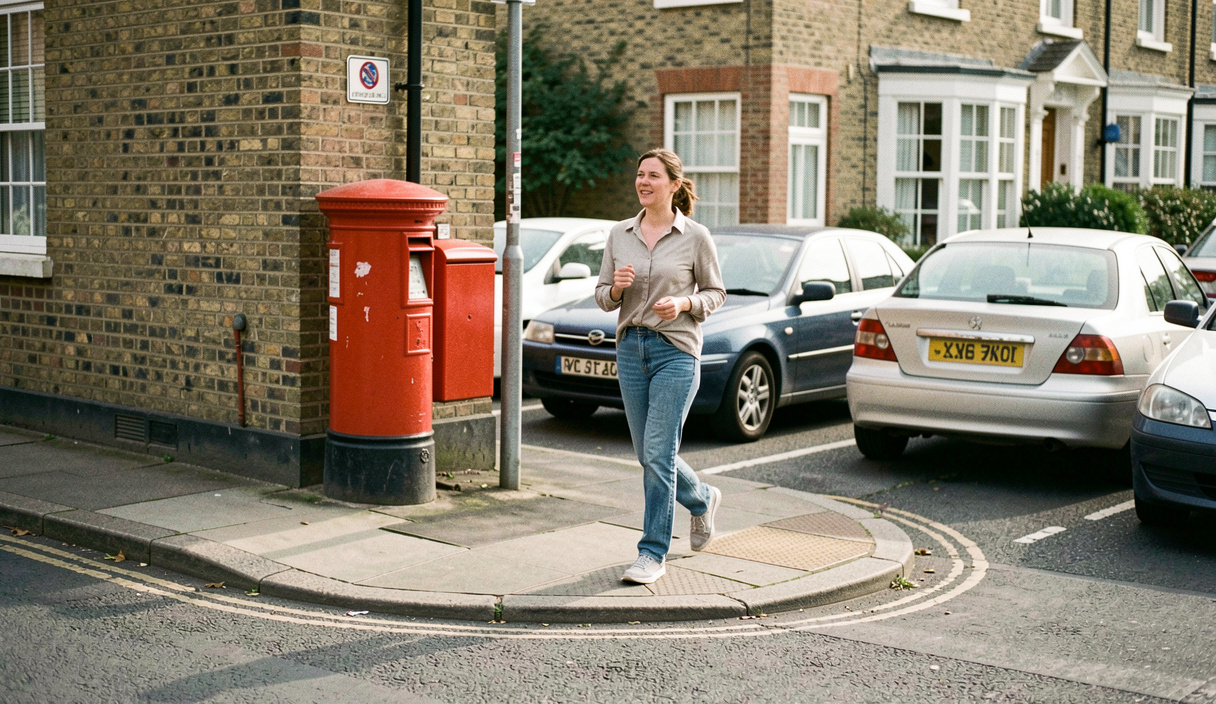
Two shapes of week
The scattered week puts movement inside the working day: after breakfast, after lunch, to the further shop, one stop early on the way home. Nothing in it needs planning, nothing in it needs a free afternoon, and the whole pattern survives a heavy calendar because each unit is small enough to lose without losing the habit.
The concentrated week does the opposite. It puts one substantial walk somewhere the week has room, usually a weekend morning, and treats the rest of the days as they come. It requires a free block, it usually requires other people to agree, and it is worth more than the sum of its minutes for reasons that have very little to do with movement.
What short walks do
Short walks break the day into pieces. A working day left unbroken is a single block from nine to six, and the afternoon inside that block is famously heavy. Ten minutes on a pavement at one o'clock does not add much to a week's total, but it does turn one long afternoon into two shorter ones, and that is a structural change rather than a fitness one.
They also happen to be the easiest habit in this magazine to keep, because they attach to things that already happen. The mechanism is described in full in the piece on the loop round the building, and the trigger, a plate going down, is more reliable than any alarm.
What short walks do not do is give you the second half of a walk. Anyone who walks regularly knows that something changes somewhere after about twenty minutes: the mental chatter that occupied the first stretch quietens, and the walk starts producing something else. Six separate ten minute walks never reach that point.
What a long walk does
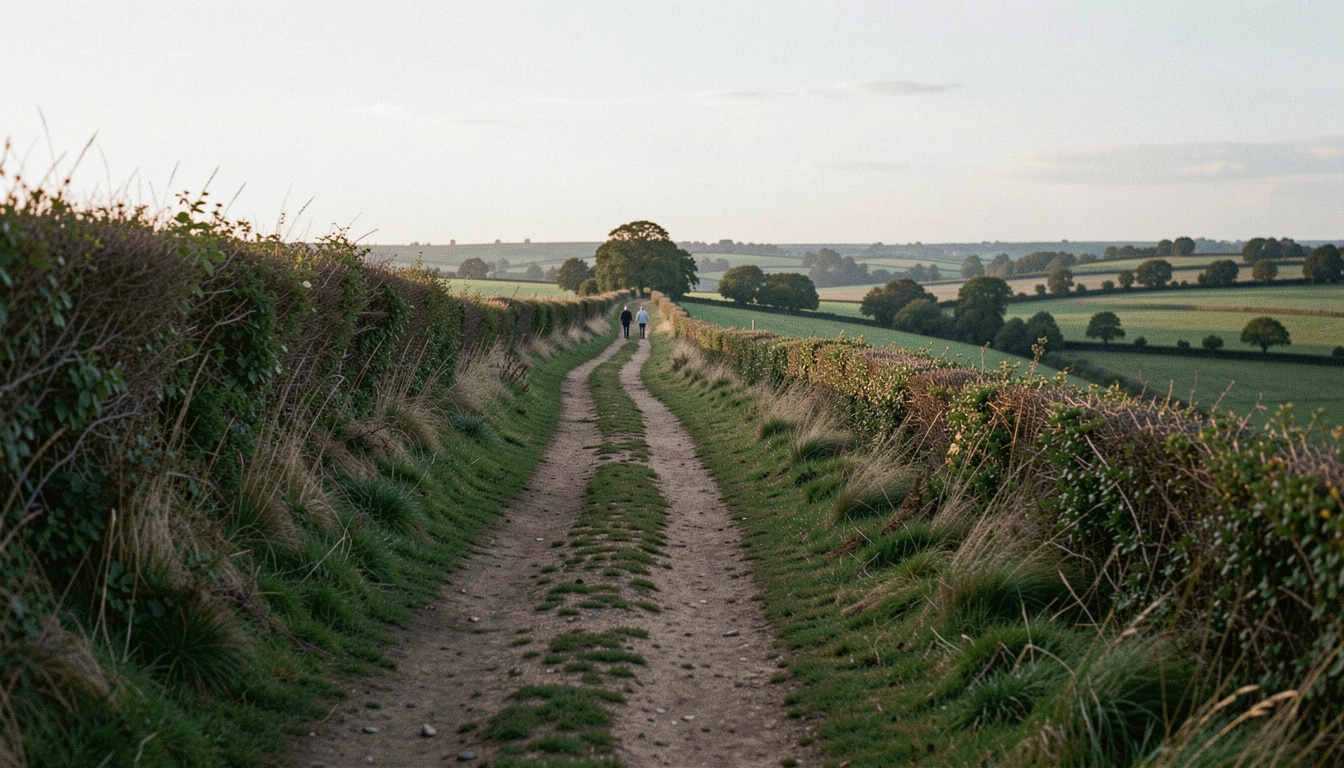
A long walk is mostly a change of scale. The route stops being a loop round a building and becomes a place. There is usually a horizon involved, or at least a different set of streets, and there is time for a conversation to get past its opening subject.
The practical case for it is that it does something no accumulation of short walks does: it empties the day of appointments for a couple of hours. That is the same commodity that our entry on where the working day is allowed to end is about, obtained by leaving the house instead of by closing a laptop.
The practical case against it is that it is fragile. It needs weather, a free block, and often company, and if any one of those fails the week contains no walking at all. A habit with three dependencies is not really a habit yet.
| Several short walks | One long walk | |
|---|---|---|
| Needs planning | No | Yes, and usually other people |
| Survives a heavy week | Mostly | Rarely |
| Breaks up the working day | Yes, that is its main effect | No |
| Gets past the first twenty minutes | Never | Always |
| Fails because of | A one o'clock meeting | Rain, or nobody free |
Building a week with both
The arrangement that held for us was simple to describe: the short walks are the habit and the long walk is the event. That ordering matters. If the long walk is the habit, then a rainy Sunday means a week with no walking. If the short walks are the habit, a rainy Sunday means a week that was slightly less good than it could have been.
In practice that means defending the small ones first: a coat near the door, a loop that cannot overrun, a fallback slot in the afternoon for the days when one o'clock is taken. Only then is it worth putting a long walk in the diary, and it should go in the diary rather than in an intention, because it competes with everything else that wants a Saturday morning.
Make the short walks the habit and the long walk the event. Reverse them and a rainy Sunday costs you the whole week.
Pace deserves a thought here too. A long walk taken briskly the whole way is a different proposition from one taken at a conversational pace, and most people do not choose deliberately between them. The distinction, and where each belongs, is the subject of the entry on matching pace to the moment.
When the week goes wrong
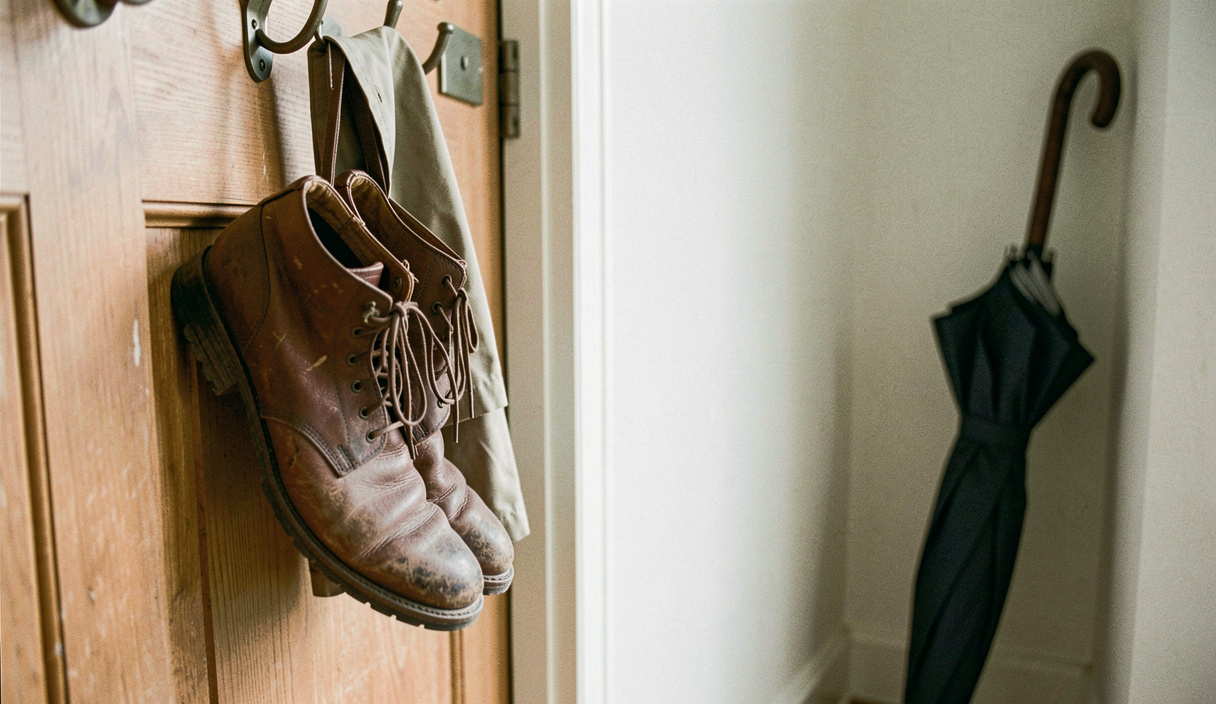
When a week collapses, and weeks do, the question is what remains. Our answer is the smallest unit: one walk, ten minutes, attached to a meal. That is the floor, and it is deliberately low enough that a genuinely awful week still clears it.
Designing a reduced version in advance, rather than improvising one when the week is already going badly, is the same idea we apply to mornings in the entry on a routine built for bad days. A floor decided in calm conditions is a floor you can actually reach in bad ones.
What we noticed
Over a fortnight the short walks happened roughly two days in three and the long walk happened once. That ratio is not a target, it is just what a normal working fortnight produced, and it matches the argument above: the small ones bend, the big one either happens or does not.
The observation worth recording is that the long walk changed the following two days more than its length would suggest, mostly in terms of what people talked about. The short walks changed each afternoon and were forgotten by the evening. Neither effect makes one of them better. They are simply not the same tool, and a week that contains only one of them is missing something.
Read next
For the smallest unit of all this, the one that survives a bad week, see our entry on walking straight after a meal.
A habit with a pre agreed reduced version is much harder to lose, which is the argument of the bad day morning routine.
Walking earlier in the day is also the easiest way to collect daylight, which matters for the reasons set out in the piece on ten minutes of daylight in the middle of the day.
If the walk is a reaction to a day spent seated, the upstream question is how the working day alternates between standing and sitting.