What Counts as a Long Walk, and When a Walk Is Short
No official body sets a length for a long walk. The workable answer comes from time and pace: an hour on foot at the brisk pace the NHS describes, about 3 miles an hour, covers roughly three miles, and that is where this magazine draws the line. Walking clubs grade a walk by distance, climb and terrain together, and the Long Distance Walkers Association uses the term long distance for walks of more than 20 miles.
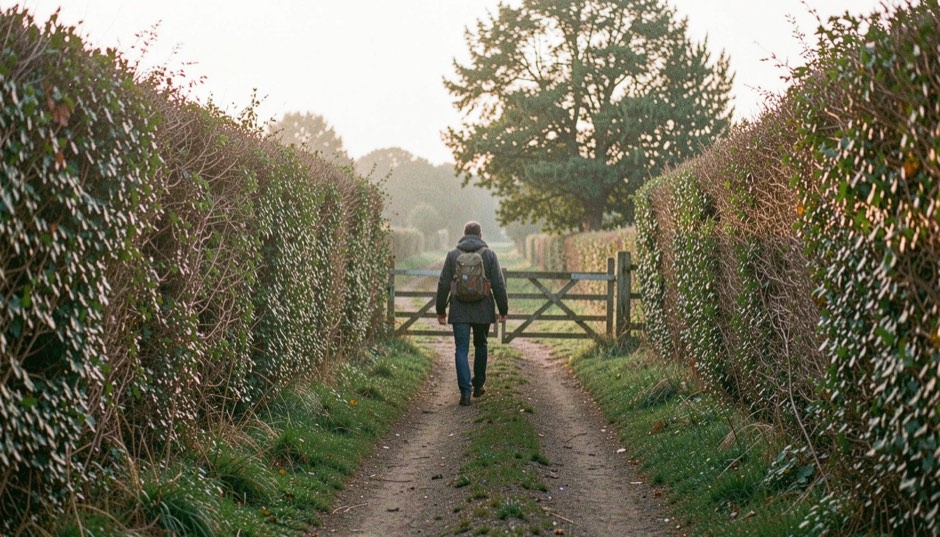
Is there an official definition of a long walk?
There is not. Health services describe what a brisk pace looks like and how many minutes a week are worth collecting, but none of them says at what point a walk becomes long. Long and short are ordinary words here rather than technical terms, so the meaning depends on the person, the ground and the reason for walking. A long walk for someone recovering from an illness and a long walk for a hill walker are not the same distance, and neither of them is wrong.
What does exist is a set of yardsticks that are each precise within their own world. Health guidance measures minutes and pace. Walking clubs measure miles, metres of climb and the roughness of the path. Mountaineers have a rule of thumb that turns a map into hours. Put side by side, they agree more than you might expect, and they make the vague question answerable.
What does a short walk mean?
In everyday English, a short walk is a claim about effort rather than a measurement. When directions say a place is a short walk from the station, they mean you will not need a bus, a car or a plan: you can leave on foot and arrive without thinking about it. The phrase carries no fixed number of minutes, which is why two people can disagree about whether a fifteen minute stroll was short.
As a habit, the short walk has a clearer shape. It is the one that needs no preparation: no change of shoes, no route, no free afternoon. On this site we use the term for anything under about twenty minutes, the length that fits inside a break without being scheduled. The best example is the ten minute loop after a meal, which survives precisely because it asks for nothing.
How far does an hour of walking take you?
Distance and time are the same question once pace is known. The NHS describes a brisk walk as about 3 miles an hour, faster than a stroll, and offers a simple check: you can still talk, but you could not sing the words to a song. Research on preferred walking speed generally places adults somewhere between about 2.5 and 3.7 miles an hour, which is roughly 4 to 5.9 kilometres an hour, with an average often given as about 3.1 miles an hour, or 5 kilometres an hour.
The table below is plain arithmetic from those three paces, on flat ground and without stops. It is the quickest way to translate a time someone mentions into a distance, or the other way round.
| Time on foot | Relaxed, 2.5 mph (4 km/h) | Brisk, 3 mph (4.8 km/h) | Quick, 3.7 mph (5.9 km/h) |
|---|---|---|---|
| 10 minutes | About 0.4 miles (0.7 km) | 0.5 miles (0.8 km) | About 0.6 miles (1 km) |
| 30 minutes | About 1.25 miles (2 km) | 1.5 miles (2.4 km) | About 1.85 miles (3 km) |
| 1 hour | 2.5 miles (4 km) | 3 miles (4.8 km) | 3.7 miles (5.9 km) |
| 2 hours | 5 miles (8 km) | 6 miles (9.7 km) | 7.4 miles (11.8 km) |
Hills change the sums. Naismith's rule, set down by the Scottish mountaineer William W. Naismith in 1892, allows one hour for every three miles on the map plus an extra hour for every 2,000 feet of ascent. The metric version usually quoted is an hour for every 5 kilometres plus an hour for every 600 metres of climb. By that rule, a 5 kilometre route with 600 metres of climb takes as long as 10 kilometres on the flat.
THE PACE BEHIND THE NUMBERS
The columns in that table are not just faster and slower versions of the same thing. A relaxed pace and a brisk one leave a person in different states afterwards, which is the argument of the entry on the difference between a slow walk and a brisk one, and it is worth reading before deciding which column describes your own walks.
How do walking clubs draw the line?
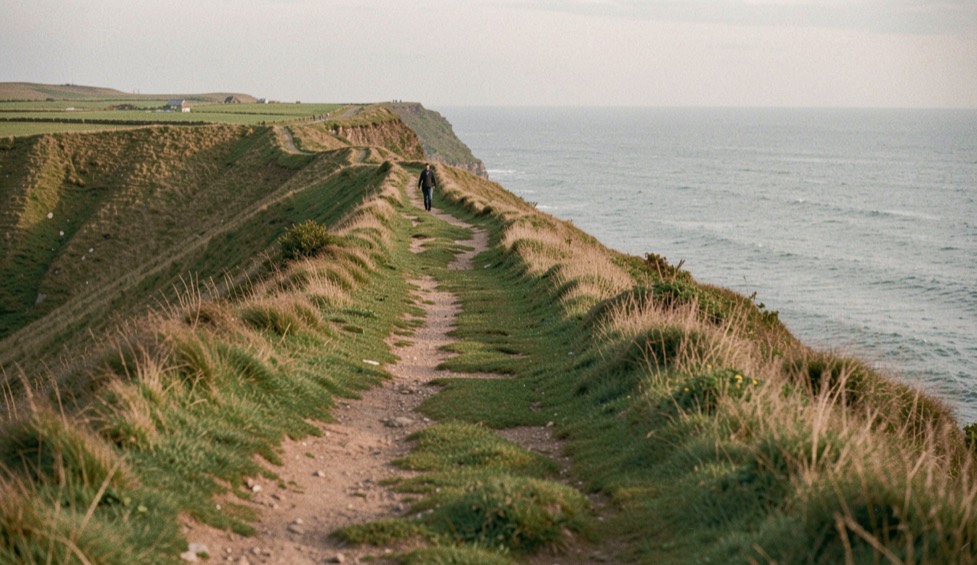
Walking clubs need clear categories, because people sign up for a walk before they see it. In Britain, Ramblers groups grade their walks with words such as Easy, Leisurely, Moderate and Strenuous. One local group, Plymouth Ramblers, gives rough bands for each: an Easy walk is typically under 5 miles with no steep inclines, a Leisurely walk up to 8 miles, a Moderate walk up to 10 miles with up to 600 metres of ascent, and a Strenuous walk up to 14 miles or more with up to 1,000 metres. The same group is clear that the walk leader sets the grade from length, terrain, pace and ascent together, not from distance alone.
At the far end of the scale, the Long Distance Walkers Association, a British club built around walking long distances, says on its own pages that it considers any walk over 20 miles to be a long distance walk. That is a useful ceiling for the question. Somewhere between the short walk round the block and the 20 mile challenge sits the everyday sense of going for a long walk.
A long walk is less a distance than a block of time that has been emptied for it.
Does length matter more than minutes?
For the weekly totals that health guidance talks about, minutes are what count. The World Health Organization's guidelines recommend that adults aged 18 to 64 do at least 150 to 300 minutes of moderate intensity aerobic activity across a week. The NHS notes that a brisk ten minute walk each day counts towards the 150 weekly minutes it recommends for adults aged 19 to 64. In that accounting, one long walk and several short ones can add up to the same figure.
Where length does matter is in what happens during the walk. A long walk leaves time for a conversation to move past its opening subject, and for the route to become a place rather than a loop. Short walks break up a working day instead. The two are compared in detail in our entry on what short walks and a long walk each do to a working week, which argues that a week is better with both.
Step counters add a third yardstick, and it is the least settled of the three. The round figure of 10,000 steps a day began as the name of a Japanese pedometer sold in the mid 1960s, the manpo-kei, rather than as the result of a study. It is a convenient target, not a definition of a long walk.
A working definition for an ordinary week
Since no authority settles it, here is the convention this magazine uses, built from the yardsticks above. A short walk lasts under twenty minutes and needs no preparation. An ordinary walk runs from twenty minutes to an hour. A long walk is an hour or more on foot, which on flat ground at the NHS brisk pace means roughly three miles and upwards, or less distance with real climbing in it. Beyond 20 miles, the walking clubs' own language takes over and the word is long distance.
The line at an hour is deliberate. It is the point at which a walk stops fitting into the gaps of a day and needs a block of its own, which is the practical difference between going out for a walk and going for a long one.
Quick answers
Is a 30 minute walk a long walk?
Not by the yardsticks above. At the NHS brisk pace of about 3 miles an hour, thirty minutes covers around a mile and a half, which sits well inside the distance one Ramblers group gives for an Easy walk. It is a solid ordinary walk, and three times the brisk ten minutes the NHS already counts towards the weekly total.
How many miles is a long walk?
There is no official figure. On flat ground, an hour at a brisk pace covers about three miles, and that is the line used here. Walking clubs also weigh climb and terrain, and the Long Distance Walkers Association uses the term long distance for walks over 20 miles.
What does a short walk away mean?
It means near enough to reach on foot without planning, usually a matter of minutes. It is an everyday phrase with no fixed distance, so it describes the effort of the trip rather than its length.
Where the distance question leads
Once walks are measured in miles or steps, the numbers tend to take over, and the entry on keeping count of a habit without chasing a streak is the corrective.
Most short walks are a response to a day spent in a chair, and the rhythm between standing and sitting at work is the other half of that problem.
A walk of any length taken in the middle of the day also collects daylight, and the piece on afternoon light and the night that follows explains why that matters.